Lives Of The Saints
July 5
St. Anthony Mary Zaccaria
Anthony Mary Zaccaria founded the Barnabites in Milan in 1530 — one of the first reforming congregations of the early sixteenth century, a generation before Trent.
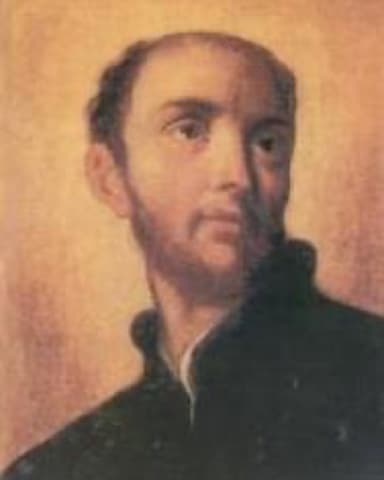
Brief life
Anthony Mary Zaccaria founded the Barnabites — the Clerks Regular of St. Paul — in Milan in 1530, one of the reforming congregations that arose in the early sixteenth century and anticipated the systematic reforms of the Council of Trent by a generation. He was born at Cremona in 1502, trained as a physician, and practised medicine before his ordination in 1528, a sequence that gave his pastoral work the practical, diagnostic character of someone accustomed to identifying problems and proposing remedies rather than simply providing comfort.
He founded the congregation with two lay companions, Bartolommeo Ferrari and Giacomo Morigia, in 1530, and the community was approved by Clement VII in 1533. The Barnabites — so called because they established themselves at the church of St. Barnabas in Milan — dedicated themselves to the preaching of the word, the administration of the sacraments, and the reform of Christian life in the parish context, with a particular emphasis on restoring the fervour of the laity through the renewal of frequent communion and eucharistic devotion. The Forty Hours devotion, one of the eucharistic observances that became characteristic of the post-Tridentine church, was promoted by the Barnabites from its earliest development in Milan.
He died in 1539 at the age of thirty-six, worn out by the pace of the work he had undertaken. The congregation he left behind was small but organized, and it grew steadily in the decades after his death, becoming one of the significant instruments of Catholic reform in northern Italy. He was canonized by Leo XIII in 1897, who described him in the canonization bull as a forerunner of the Tridentine reform. The medical background is significant: the founder who diagnosed the condition of the Church in his time and organized a specific remedy for it was doing something analogous to what he had done as a physician, at a larger scale.
Keep reading
Nearby saint lives
Move through the calendar without leaving the saint library. These nearby feast-day lives help keep the reading trail connected.
Pray with this saint
Carry this saint into prayer
If this life stirred a particular need, keep going with the closest prayer links in the library.