2 minutes
3 stepsFor a brief recollection before you go in.
Traditional sacramental guide
A simple guide to help you prepare well for confession, speak honestly, give thanks afterward, and begin again with a firm purpose of amendment.
This guide draws from older Catholic prayer books and confession manuals. It helps you prepare for sacramental confession, but it does not replace the sacrament, your confessor, or pastoral judgment in the confessional.
Before you begin
Come here before confession when you need help gathering your heart, examining your conscience, remembering the older formula, or giving thanks after absolution.
The point is not to turn confession into an anxious system. The point is to help you speak plainly, accuse yourself honestly, trust God's mercy, and leave with a real purpose of amendment.
Choose your preparation
Use the whole guide when you can. When time is short, take the deepest preparation you can honestly make and then go with humility and trust.
For a brief recollection before you go in.
For a solid preparation when time is short but not desperate.
For a more serious preparation before a scheduled confession.
For a quieter, thorough use of the whole guide.
Private preparation note
This note stays only in this browser on this device, never syncs through Novena Regina, and can be opened again from the note bar as you move through the page.
Go deeper later
Open the fuller commandment, state-of-life, capital-sins, and accessory-to-sin material when the shorter examination here is not enough.
Open deeper examinationsWhen the same sins return again and again, the deeper question is not only what you did, but what keeps governing you underneath.
Read the ruling passion guideAsk for light, ask for sincerity, and then examine yourself without hurry or self-excuse.
O Jesus, my Saviour, my good Shepherd, I have strayed far from the path that Thou hast marked out for me; I did not follow in Thy footsteps; I wandered into forbidden places.
Repentant and sorrowful, I beg to be admitted again into the fold of Thy faithful followers. I want to confess my sins with the same sincerity as I should wish to do at the moment of my death.
My Jesus, I look to Thee with confidence for the grace to examine my conscience well. O Holy Spirit, come in Thy mercy; enlighten my mind and strengthen my will that I may know my sins, humbly confess them, and sincerely amend my life.
Mary, my Mother, immaculate spouse of the Holy Ghost, refuge of sinners, assist me by thy intercession. Holy angels and saints of God, pray for me. Amen.
Lasance begins with your last confession, then leads you through the commandments, the precepts of the Church, your duties, and the sins that most often pull you back.
Preliminary examination
Then examine yourself on
Calmly recall the occasions of sin, the company you kept, the places you frequented, and the circumstances that made the fault graver.
Traditional commandment examination
The commandments in detail
Open a slower commandment-by-commandment examination when the shorter headings above are not enough to uncover what needs to be confessed.
I
Thou shalt not have strange gods before Me.
Faith, prayer, reverence, and false spiritual substitutes.
II
Thou shalt not take the name of the Lord thy God in vain.
Speech about God, oaths, blasphemy, and stirring others to irreverence.
III
Remember that thou keep holy the Sabbath day.
Mass, recollection, and the right use of Sundays and holy days.
IV
Honor thy father and thy mother.
Obedience, gratitude, reverence, and the duties proper to authority and dependence.
V
Thou shalt not kill.
Hatred, revenge, provoking others, and harming body or soul.
VI and IX
Thou shalt not commit adultery. Thou shalt not covet thy neighbor’s wife.
Purity in thought, word, desire, company, and deed.
VII
Thou shalt not steal.
Property, wages, fair dealing, waste, and dishonest gain.
VIII
Thou shalt not bear false witness against thy neighbor.
Truth, reputation, flattery, rash judgment, and harmful speech.
X
Thou shalt not covet thy neighbor’s goods.
Interior discontent, grasping desire, and unjust longing for another’s possessions.
Precepts of the Church
Examine yourself also in regard to the Seven Capital Sins, the ways you have been accessory to another's sin, and the duties proper to your state in life.
Stir up contrition
Accessory to another's sin
Older manuals ask not only what you did, but how you shared in the wrongdoing of others. Examine whether you helped sin along, excused it, or kept silent when you had a duty to resist it.
When to slow down
The Seven Capital Sins
Open the older root-fault examination when you need to look beneath repeated falls and name the habits that keep feeding them.
Duties of your state in life
Older catechisms press this point hard: you are not judged only by private faults, but also by the duties attached to the place God has actually given you. Examine the obligations of your home, your work, and your present vocation as they truly stand.
Go to confession
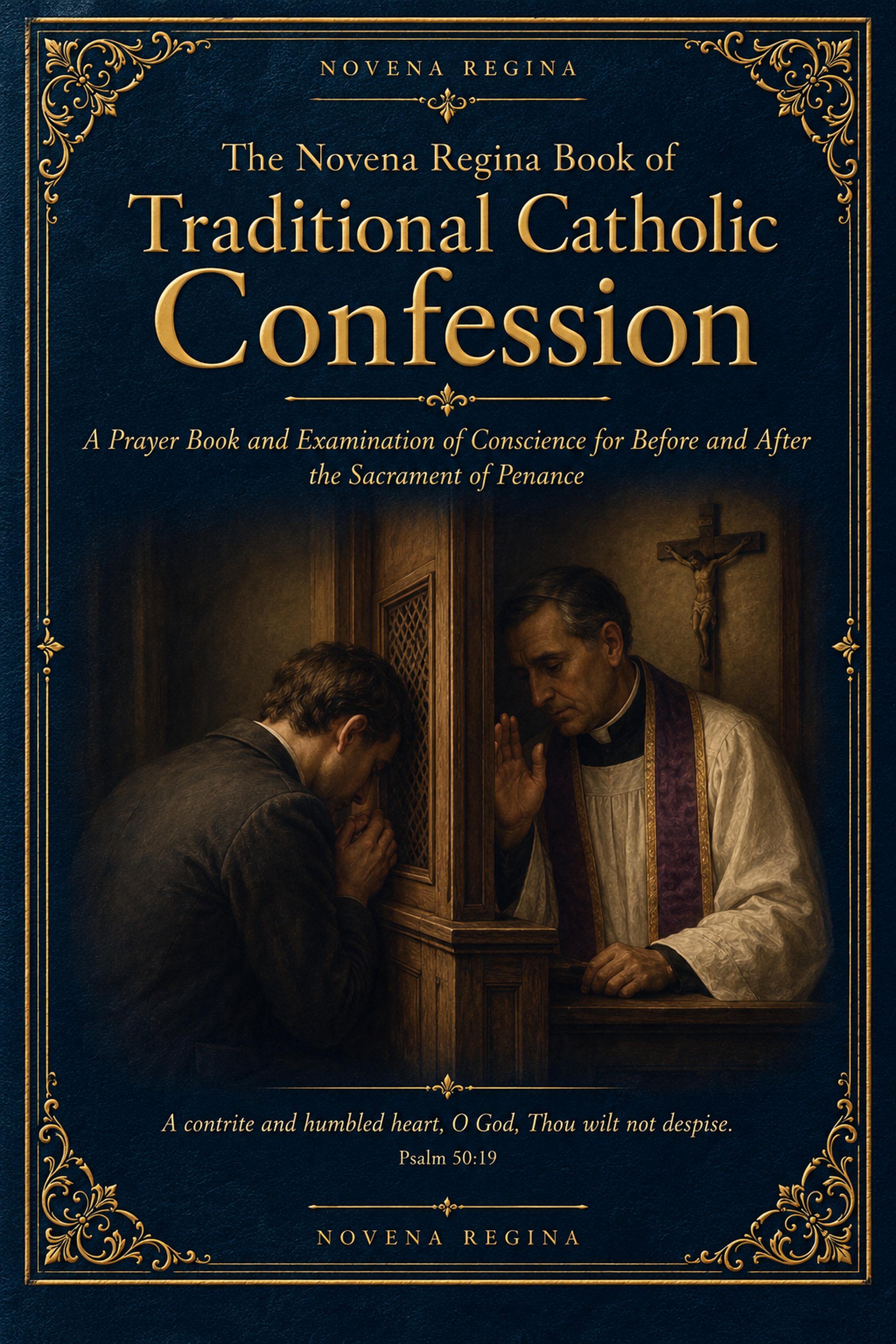
Local custom can vary, but the traditional manuals are plain and direct. They teach you how to begin, accuse yourself honestly, and conclude without ornament.
Approach the confessional with recollectedness and reverence, remembering that the priest hears you in the person of Christ.
When you kneel down say: “Bless me, Father, for I have sinned,” and begin the Confiteor, proceeding as far as “through my fault.”
Tell when you made your last confession and then confess your sins with a contrite and humble heart.
Conclude in the traditional manner: “For these and all the sins of my past life, especially my sins of [name them], I am heartily sorry, beg pardon of God, and absolution of you, my Father.” Then finish the Confiteor.
Listen humbly to the counsel of your confessor, accept the penance imposed, and during absolution make an act of sincere contrition.
How to say it plainly
After absolution
I confess to Almighty God, to blessed Mary, ever Virgin, to blessed Michael the Archangel, to blessed John the Baptist, to the holy apostles Peter and Paul, to all the saints, and to you, Father, that I have sinned exceedingly in thought, word, and deed, through my fault, through my fault, through my most grievous fault.
Therefore, I beseech the blessed Mary, ever Virgin, blessed Michael the Archangel, blessed John the Baptist, the holy apostles Peter and Paul, all the saints, and you, Father, to pray to the Lord our God for me.
O my God, I am heartily sorry for having offended Thee, and I detest all my sins, because I dread the loss of heaven and the pains of hell, but most of all because they have offended Thee, my God, Who art all-good and deserving of all my love.
I firmly resolve, with the help of Thy grace, to confess my sins, to do penance, and to amend my life. Amen.
Give thanks
Older manuals give real space to thanksgiving after confession. They assume that pardon should be answered with gratitude, vigilance, and fresh dependence on grace.
Eternal Father, I thank Thee, I bless Thee, for Thy goodness and mercy. Thou hast had compassion on me, although in my folly I had wandered far away from Thee and offended Thee most grievously.
With fatherly love Thou hast received me anew after so many relapses into sin and forgiven me my offenses through the holy sacrament of penance. Blessed forever, O my God, be Thy loving kindness, Thy infinite mercy.
Never again will I grieve Thee by ingratitude, by disobedience to Thy holy will; henceforth my watchword shall be: All for the greater glory of God.
O divine Spirit, penetrate my soul with true horror and loathing of sin. Grant that I may be more exact in the fulfilment of all my duties, and strengthen me by Thy grace, that I may not again yield to temptation. Amen.
If you examined yourself with reasonable care and forgot a mortal sin, trust that it was forgiven with the rest. Do not run back into needless distress.
Tell it simply at your next confession before your usual confession begins: that you forgot it last time. Only a sin concealed on purpose wounds the confession itself.
Listen carefully for the penance given, and if no time is named, do it as soon as you reasonably can. Promptness helps keep the soul grateful and obedient.
The small penance given may not equal the whole debt of sin, but by accepting it humbly you show your willingness to make satisfaction and begin again seriously.
The older manuals insist that a firm purpose of amendment includes avoiding the occasion of sin. Do not walk back toward the very danger you just renounced.
If you know the company, place, hour, device, habit, or conversation that usually drags you down, step away from it today while the grace of confession is still warm upon the soul.
Lasance closes the section by sending the penitent into the Psalms. These verses are good to pray slowly after confession, on the way home, or later that same day when the soul wants to keep company with mercy.
A same-day resolution prayer
This short Lasance prayer works well the same day after confession, especially when you want to keep one resolution plain and close at hand.
O my God, I beseech Thee most earnestly to bless me, that I may serve Thee faithfully this day by a perfect devotedness to all my duties and a steadfast adherence to all my promises and good resolutions.
Older counsel
These short counsels do not replace the examination above. They help steady the spirit in which confession is made: honest, humble, concrete, and confident in God’s mercy.
Introduction to the Devout Life
Do not let the soul remain long in sin when so sure a remedy has been given. Go humbly and devoutly, and make use of confession not only for pardon, but for light, strength, and amendment.
The Spirit of St. Francis de Sales
Bring frankness, candor, and simplicity into confession. A hurried sorrow often passes quickly; a humble sorrow is more likely to lead to a steadier amendment.
The Spiritual Exercises
Ask for light before you begin, look at your actual sins concretely, and seek a real sorrow that prepares the soul to receive grace more fruitfully. End by asking for one grace you need now.
Amend your life
A purpose of amendment should be simple enough to remember and concrete enough to obey. Take one resolve with you instead of vague good intentions.
If your sin harmed another person, a promise, a reputation, or something that was owed, resolve to make that right as soon as you can.
Name the near occasion that usually leads you back into the same fall, and decide how you will step away from it this week.
Choose one contrary good: a prayer, an act of honesty, a work of mercy, or a concrete act of obedience that turns your heart back toward God.
A firm purpose of amendment does not mean only, “I hope I do better.” It means stepping away from what usually leads you back into the same sin.
Name the danger plainly: a place, device, hour, companionship, habit, or conversation. Remove it, limit it, or refuse it while the grace of confession is still fresh.
Older catechisms tell you to notice not only the sin you hate most, but the one you commit most often. That repeated fault usually points toward the ruling passion underneath it.
Ask whether pride, anger, impurity, vanity, sloth, greed, or self-will keeps furnishing the same occasions. Fight the root, not only the branch.
Tonight after confession
Before sleep, make one short return to the grace you received. This is not a second confession. It is a quiet way of guarding the mercy of the day.
Source note
This page draws chiefly from Francis Xavier Lasance, With God: A Book of Prayers and Reflections (1911), especially the confession pages 383 through 397, with supplementary state-of-life material from older catechetical manuals and a brief counsel layer from older Catholic spiritual writers.
The headings and transitions are added to make the older material easier to read on a phone. The prayers, examination lines, and confession formula here follow the older traditional material rather than later simplified rewrites.
Novena Regina
A traditional Catholic confession aid drawn from older prayer books and confession manuals.
A printable guide for preparing your heart, examining your conscience, making a plain confession, giving thanks afterward, and carrying one real amendment into the day.
Preparation
Begin by asking for light, sincerity, and a quiet willingness to be shown the truth. This guide is meant to help you gather your heart, examine your conscience honestly, and go to confession with humility and trust. It does not replace the sacrament, your confessor, or pastoral judgment in the confessional.
If you have only a minute or two, pray first, recall the worst sin and the one most often repeated, and stir up sorrow before God. If you have a few minutes more, use the preliminary questions and the simpler examination, then review the older formula so you can speak plainly and without wandering.
If you have more time, move through the whole guide in order without hurry. Stay longer wherever the conscience is truly accused, end with the Act of Contrition, and return afterward for thanksgiving and one real amendment of life.
Prayer before confession
O Jesus, my Saviour, my good Shepherd, I have strayed far from the path that Thou hast marked out for me; I did not follow in Thy footsteps; I wandered into forbidden places.
Repentant and sorrowful, I beg to be admitted again into the fold of Thy faithful followers. I want to confess my sins with the same sincerity as I should wish to do at the moment of my death.
My Jesus, I look to Thee with confidence for the grace to examine my conscience well. O Holy Spirit, come in Thy mercy; enlighten my mind and strengthen my will that I may know my sins, humbly confess them, and sincerely amend my life.
Mary, my Mother, immaculate spouse of the Holy Ghost, refuge of sinners, assist me by thy intercession. Holy angels and saints of God, pray for me. Amen.
Examination
Do not try to answer everything at once. Ask first where you have resisted grace most plainly, whom you have harmed most really, and which sins have returned most often.
Begin where the older manuals begin: with faith, prayer, reverence, and the right use of the Lord’s Day. Have you neglected prayer, doubted willingly, or grown careless toward God? Have you spoken irreverently of God, sacred things, priests, or religion? Have you missed Mass or treated Sundays and holy days carelessly?
Now turn your conscience toward how you have treated others. This is not only about great harms. Have you carried resentment, harsh speech, or a refusal to forgive? Have you wounded another in peace, reputation, truth, or gratitude? Have you failed in obedience or reverence where it was truly owed?
Then ask how you have stood in purity, truth, and justice. Have you consented to impurity in thought, speech, company, entertainment, or deed? Have you lied, judged rashly, exposed another’s faults, or darkened a reputation? Have you been dishonest in money, work, property, wages, or restitution?
Finally, look beneath the isolated falls. Where were you weakest in habit? Was pride, anger, sloth, vanity, greed, envy, or self-will feeding the same sins again? Did you return willingly to the near occasion that usually leads you back down? Did you help along another’s sin by counsel, consent, silence, excuse, or bad example?
Before you finish, stir up contrition. Ask not only what you did, but how you have offended God Who has been patient, gracious, and merciful to you. Let the conscience accuse you simply, and stay a little longer wherever it truly pierces.
Particular duties
You are judged not only by private faults, but also by the duties attached to the life God has actually given you. Read this part simply and apply only what is really yours.
Parents and guardians should ask whether they cared for those under them not only in body but in soul. Have you corrected with charity, given good example, and helped rather than hindered prayer, Mass, and obedience to God?
Those whose daily life is work, wages, service, or promises owed should ask whether they worked honestly, kept their word, and dealt fairly. If others depend on you, ask whether you have been just in burdens, pay, expectations, and the use of another’s need.
Those who have authority over others should ask whether they used it as a stewardship from God or as a license for pride, hardness, neglect, or selfish control. Have you guided, protected, and corrected as duty required?
Traditional formula
When you enter, kneel with recollection and begin in the older plain way: "Bless me, Father, for I have sinned. It has been..." Then accuse yourself simply, naming the sins that weigh upon the conscience most truly, and state anything serious in kind and number as honestly as you can.
Do not tell a long story if a plain accusation will do. Speak honestly, briefly, and with sorrow. If shame rises, let it help your humility rather than drive you into confusion. Better a poor confession made sincerely than a polished one made without contrition.
Listen carefully to the counsel and penance given. When told to make your act of contrition, do so with attention. Receive absolution gratefully, then withdraw without hurry and begin your thanksgiving while the grace is still fresh upon the soul.
Confession prayers
I confess to Almighty God, to blessed Mary, ever Virgin, to blessed Michael the Archangel, to blessed John the Baptist, to the holy apostles Peter and Paul, to all the saints, and to you, Father, that I have sinned exceedingly in thought, word, and deed, through my fault, through my fault, through my most grievous fault.
Therefore, I beseech the blessed Mary, ever Virgin, blessed Michael the Archangel, blessed John the Baptist, the holy apostles Peter and Paul, all the saints, and you, Father, to pray to the Lord our God for me.
O my God, I am heartily sorry for having offended Thee, and I detest all my sins, because I dread the loss of heaven and the pains of hell, but most of all because they have offended Thee, my God, Who art all-good and deserving of all my love.
I firmly resolve, with the help of Thy grace, to confess my sins, to do penance, and to amend my life. Amen.
Thanksgiving and amendment
Do not leave the grace of confession behind as soon as you step away. Give thanks, do your penance promptly, and keep one simple amendment close at hand for the rest of the day.
Eternal Father, I thank Thee, I bless Thee, for Thy goodness and mercy. Thou hast had compassion on me, although in my folly I had wandered far away from Thee and offended Thee most grievously.
With fatherly love Thou hast received me anew after so many relapses into sin and forgiven me my offenses through the holy sacrament of penance. Blessed forever, O my God, be Thy loving kindness, Thy infinite mercy.
Never again will I grieve Thee by ingratitude, by disobedience to Thy holy will; henceforth my watchword shall be: All for the greater glory of God.
O divine Spirit, penetrate my soul with true horror and loathing of sin. Grant that I may be more exact in the fulfilment of all my duties, and strengthen me by Thy grace, that I may not again yield to temptation. Amen.
Listen carefully for the penance that was given, and if no time is named, do it as soon as you reasonably can. Promptness helps keep the soul grateful and obedient, and keeps pardon from becoming a merely passing relief.
Should a forgotten sin return to mind after a reasonable examination, trust that it was included under God’s mercy and mention it simply next time. Only a sin concealed on purpose wounds the confession itself; a forgotten sin need not send you into needless distress.
Then guard against the same fall by naming the danger plainly. The older manuals insist that a firm purpose of amendment includes avoiding the occasion of sin. If a place, device, companionship, hour, or habit usually drags you down, step away from it while the grace of confession is still warm upon the soul.
Do not fight only the outward act. Ask what fault keeps feeding it underneath. Pride, anger, sloth, vanity, greed, envy, impurity, or self-will often keep furnishing the same falls. Fight the root, not only the branch.
Before sleep, return once more to the grace you received. Ask yourself simply: Did I keep away from the near occasion I meant to avoid today? When the first temptation came, did I pray and use God’s help, or did I drift toward the old habit again? What one mercy from today should I thank God for before sleep, and what one resolution must I carry into tomorrow?
O my God, I beseech Thee most earnestly to bless me, that I may serve Thee faithfully this day by a perfect devotedness to all my duties and a steadfast adherence to all my promises and good resolutions.
Traditional sources
This confession aid draws chiefly from Francis Xavier Lasance, With God: A Book of Prayers and Reflections (1911), especially the confession pages, together with older catechetical manuals on duties of state and amendment of life.
The headings and transitions are editorial helps for print. The prayers, examination lines, and confession formula follow the older traditional material rather than later simplified rewrites.