January 1
St Odilo
Odilo was one of the great abbots of medieval Europe: a reformer, peacemaker, and merciful ruler whose Cluny shaped both monastic life and the Church's remembrance of the dead.
Lives Of The Saints
This section was built from Butler's Lives of the Saints as the anchor source. The goal was simple: use Butler first, avoid casual source mixing, and keep any later supplementation clearly separate and clearly labeled.
About this library
These lives were drawn from Butler's Lives of the Saints, then shaped into a phone-friendly reading experience without flattening their devotional seriousness.
How to use it
Read today's saint when you want one strong example of fidelity, then browse by month when you want a wider sense of the Church's calendar and memory.
Browse the calendar
Showing 367 saints grouped by feast month.
31 saints prepared

January 1
Odilo was one of the great abbots of medieval Europe: a reformer, peacemaker, and merciful ruler whose Cluny shaped both monastic life and the Church's remembrance of the dead.

January 2
The Holy Name of Jesus is about more than a sacred word. It points to the person and saving work of Christ and to the Church's long habit of praying with His holy name on her lips.

January 3
Genevieve is not remembered merely for visions or fasting. She is remembered as the praying woman who steadied Paris in danger and famine, while keeping her holiness rooted in silence, penance, and charity.
Image still being prepared
St Gregory of Langres
January 4
Gregory of Langres is memorable because he became holy late and took that change seriously. He is given as a ruler turned bishop whose final years were spent in prayer, justice, and quiet charity.
Image still being prepared
St Simeon the Stylite
January 5
Simeon sounds extraordinary because he was, but the focus stays in the right place: not on the pillar itself, but on the holiness, endurance, and pastoral usefulness of the man who stood upon it.

January 6
This is one of the great feasts of the year. The Magi remain at the center for the West, while the wider Christian meaning of Epiphany as Christ revealed to the world also stays clear.
Image still being prepared
St Lucian of Antioch
January 7
Lucian stands here as both scholar and martyr. He cared deeply about Scripture, and then sealed his witness with years of imprisonment and a steadfast death for Christ.
Image still being prepared
St Severinus of Noricum
January 8
Severinus is remembered as the monk who held frightened frontier communities together when the Roman world on the Danube was breaking apart. Prayer, warning, relief, and rescue all belong equally to his story.
Image still being prepared
St Peter of Sebaste
January 9
Peter of Sebaste belongs to a famous Christian family, yet he keeps his own clear shape: monk, bishop, defender of the faith, and generous shepherd in a time of famine and doctrinal unrest.
Image still being prepared
St William of Bourges
January 10
William of Bourges is a real bishop of the old school: austere with himself, gentle with the poor, and immovable when conscience or the rights of the Church were at stake.
Image still being prepared
St Theodosius the Cenobiarch
January 11
Theodosius was strict with himself, yet the monastery he built became a place of order, shelter, and mercy for both monks and strangers in need.

January 12
Benedict Biscop is one of the builder saints of early England. He traveled, learned, brought back what would deepen worship and learning, and turned Wearmouth and Jarrow into living centers of Christian culture.
Image still being prepared
Bd Godfrey of Kappenberg
January 13
Godfrey's life is short but memorable because the renunciation is so complete. He did not simply support reform from a distance, but gave away his standing and entered it himself.

January 14
Hilary feels like convert, bishop, exile, theologian, and defender of the Nicene faith. He feels both intellectually serious and personally brave, which is why he stands so large in the early Western Church.

January 15
Paul the Hermit remains one of the great desert portraits: a life of silence, providence, and radical hiddenness in God. Even the legendary color serves the larger picture of total withdrawal for the sake of holiness.
Image still being prepared
St Fursey
January 16
Fursey is remembered for visions, but he was far more than a visionary. He was a missionary monk and founder whose inward depth became practical Christian labor in Ireland, England, and Gaul.

January 17
Antony is one of the giants of the whole collection: not just a desert solitary, but the father of monks, a master of discernment, and a man whose hidden life became fruitful for the whole Church.

January 18
This feast honors not a separate episode in Peter's life so much as the office attached to his chair. It keeps in view the Church's memory of Peter's teaching and pastoral authority and the liturgical tradition that grew around it.
Image still being prepared
St Wulfstan of Worcester
January 19
Wulfstan of Worcester stands as one of the strongest English bishops of the age. He joined prayer, reform, and pastoral steadiness to remarkable calm in the upheaval of the Norman conquest.
Image still being prepared
St Euthymius the Great
January 20
Euthymius is another major desert father, but his strength feels quieter than Antony's. He is a lover of solitude whose holiness widened into guidance, conversion, and real pastoral authority.

January 21
Agnes is one of the clearest Roman martyr lives in the calendar. Her early cult is beyond doubt, later embellishments are treated cautiously, and what remains is already deeply moving.
Image still being prepared
St Vincent of Saragossa
January 22
Vincent is one of the great martyr lives because the violence never becomes the real center. The center is the young deacon's peace, clarity, and constancy under everything meant to break him.
Image still being prepared
St John the Almsgiver
January 23
John the Almsgiver makes holiness look concrete. He is shown feeding, relieving, judging fairly, correcting abuses, and spending himself for the poor with a warmth that never loses practical wisdom.
January 24
Timothy's life feels close to Scripture from beginning to end. It keeps him near St Paul, and through that friendship shows a faithful disciple growing into a pastor, bishop, and martyr.

January 25
This feast stays fixed on one event and its meaning: the mercy of God breaking into Saul's life and changing everything. It is one of the great conversions and one of the great thanksgivings in the whole Church.

January 26
Polycarp feels like one of the Church's deep roots. He stands close to the apostles, and his martyrdom has such early and plain strength that it hardly needs ornament at all.

January 27
Chrysostom's life is large because his preaching and his suffering were both large. He is a man whose golden mouth mattered precisely because he refused to flatter when the truth had become dangerous.
Image still being prepared
St Paulinus of Aquileia
January 28
Paulinus is a quieter kind of great saint: learned, missionary, and careful both about doctrine and conscience. He stands out because his seriousness feels historically firm and pastorally sound.

January 29
Francis de Sales is one of the fullest pastor-saint lives in the collection: learned, brave, gentle, practical, and deeply human. The lasting surprise of the life is how much strength lives inside his gentleness.
Image still being prepared
St Bathildis
January 30
Bathildis moves through four distinct lives at once: servant, queen, regent, and nun. She is memorable because the life gives her real weight both as a ruler and as a penitent.

January 31
John Bosco stands out because his holiness is always active and fatherly. He built schools, communities, and whole institutions, but the heart of his life never moved away from poor boys and the saving of their souls.
28 saints prepared

February 1
Ignatius is one of the clearest early Christian voices after the apostles. His letters show a bishop going to martyrdom with courage, doctrinal clarity, pastoral warmth, and a consuming love for Christ.

February 2
This feast holds together Mary's humility, Christ's presentation, Simeon's joy, and the Church's long memory of Candlemas. It is not a biography, but it is one of the most graceful feasts in the cycle.
Image still being prepared
St Anskar
February 3
Anskar is steady rather than dramatic. It keeps starting again after ruin and setback, and that persistence is the real miracle in his life.

February 4
Andrew Corsini is a conversion-and-pastor life. He matters not because he was perfect from childhood, but because grace changed him deeply and kept bearing fruit in public service.

February 5
Agatha is one of the clearest examples of a martyr whose ancient cult is firmer than the fuller legend around her. Her feast remains powerful because courage, purity, and endurance still stand at the center.
Image still being prepared
St Amand
February 6
Amand feels restless in the best way. It keeps moving, preaching, founding, correcting, and beginning again, which is exactly why he feels like one of the real builders of Christianity in his region.

February 7
Romuald stands as hermit, reformer, and founder. His life is austere, but it is not empty severity.
Image still being prepared
St John of Matha
February 8
John of Matha is a good example of reverence joined to restraint. The inflated storytelling is cut back, but the real core remains strong: a founder whose name is tied to mercy for captives.

February 9
Cyril of Alexandria is not an easy saint, but he is a major one. He is remembered because he fought hard for the truth about Christ and helped secure the Church’s language about the Incarnation.

February 10
Scholastica's life is brief, but it stays with you. Prayer, holy friendship, and one last meeting say almost everything that needs to be said.

February 11
Lourdes is a feast of hidden beginnings, hard scrutiny, and enduring grace. Bernadette, the grotto, the spring, and the name of the Immaculate Conception all matter, but so does the quiet life that followed.
Image still being prepared
St Meletius of Antioch
February 12
Meletius is a quiet kind of strong bishop. He stands out because he suffers long, keeps the faith, and still wins affection in the middle of bitter church conflict.
Image still being prepared
St Catherine dei Ricci
February 13
Catherine dei Ricci is one of the major mystic lives, but the extraordinary signs are not the final center. Her story keeps returning to prayer, patience, obedience, and love of Christ's Passion.

February 14
Valentine is not presented through a simple biography at all. His feast is a careful handling of a famous but tangled tradition, keeping the likely real martyr while cutting back insecure later storytelling.
Image still being prepared
Blessed Claud La Colombiere
February 15
Claud La Colombiere is compelling both as a holy Jesuit priest in his own right and as the prudent confessor who helped steady devotion to the Sacred Heart at a crucial moment.
Image still being prepared
St Gilbert of Sempringham
February 16
Gilbert of Sempringham does not arrive as a dramatic wonder-worker. He builds something real out of parish care, discipline, and endurance, which is exactly why the life feels so steady and serious.
Image still being prepared
St Finan
February 17
Finan is remembered as Aidan's sturdy successor: a missionary bishop who helped carry the Gospel from Lindisfarne into Mercia and beyond while keeping the Ionan spirit of poverty, discipline, and practical zeal.
Image still being prepared
St Flavian of Constantinople
February 18
Flavian's life is a hard one. He is shown suffering for clear teaching, patience, and courage when what should have been a council descends into force and mob violence.
Image still being prepared
St Mesrop
February 19
Mesrop's holiness looks like work that lasts. He is remembered as missionary, teacher, and maker of letters, the man who helped give Armenia a Christian voice and literature of its own.
Image still being prepared
St Eucherius of Orleans
February 20
Eucherius is a calm, costly kind of saint. He is remembered as a bishop who would rather lose his see than stay silent while the goods of the Church were taken by force.
Image still being prepared
Blessed Robert Southwell
February 21
Southwell feels like priest first, poet second. His writing is memorable because it was born from a hidden mission, patient endurance, and a very real martyrdom.

February 22
February 22 is a feast about Peter's office rather than a second biography of Peter. It keeps in view Antioch's place in his ministry and the Church's liturgical memory of his pastoral authority.

February 23
Peter Damian stands as hermit, cardinal, and reformer. His severity makes sense once the whole life is seen: a man shaped by penance who believed a wounded Church needed truth more than comfort.

February 24
Matthias is remembered first through Acts: a disciple from the beginning, chosen to restore the Twelve. The later traditions are uncertain, but the apostolic core is unusually strong and important.
Image still being prepared
St Tarasius
February 25
Tarasius stands out as a statesman turned patriarch who kept his soul free. He helped heal the iconoclast crisis, lived austerely, and refused to let emperors use the Church to bless their private will.
Image still being prepared
St Porphyry of Gaza
February 26
Porphyry’s life moves from hidden asceticism into open missionary battle. He is memorable because he wins a hostile city not by noise alone, but by endurance, prayer, and patient courage.

February 27
Gabriel feels fresh because he stays human. His holiness grows less through public exploits than through the patient offering of a gifted young life in ordinary religious fidelity.

February 28
Angela of Foligno is far more than a simple conversion story. Her life is the painful and beautiful remaking of a human soul through repentance, penance, charity, and mystical union with God.
31 saints prepared

March 1
David is presented as the great Welsh bishop and ascetic, with proper caution still kept in view. The later stories are often legendary, but the stature of the saint behind them is real.
Image still being prepared
St Chad
March 2
Chad stands as monk, missionary, and bishop. What makes him memorable is not brilliance but humility: he accepted correction without pride and spent himself in the patient work of shepherding souls.
Image still being prepared
St Aelred of Rievaulx
March 3
Aelred’s life is full of tenderness and depth. He is an abbot whose austerity never made him cold, and whose holiness remained deeply humane.

March 4
Casimir is the picture of a young prince who refused to let rank corrupt him. Purity, peace, generosity, and freedom from ambition give his whole life its shape.
Image still being prepared
St John Joseph of the Cross
March 5
John Joseph’s life is strong and practical. He is shaped by poverty, work, obedience, and endurance, but also by warmth, cheerfulness, and real spiritual authority.

March 6
Perpetua, Felicity, and their companions still sound like living people rather than distant figures. That nearness gives their martyrdom its lasting force and tenderness.

March 7
Thomas Aquinas appears not just as a towering theologian, but as a holy Dominican whose intellect, prayer, humility, and obedience truly belong together.

March 8
John of God’s life is full of movement and mercy. He is a man converted hard and then spent almost completely in service of the sick, poor, and forgotten.

March 9
Frances of Rome is one of the most attractive married saints in Christian history. Her holiness is shown in marriage, grief, service, prayer, and only later in a more openly religious foundation.
Image still being prepared
The Forty Martyrs of Sebastea
March 10
The Forty Martyrs are remembered as brothers who suffered together. Their feast endures because it unites courage, temptation, and persevering fellowship in one unforgettable scene.
Image still being prepared
St Eulogius of Cordova
March 11
Eulogius stands out as priest, writer, and martyr. He strengthened wavering Christians with both teaching and personal courage, then sealed that witness with his blood.

March 12
Gregory stands as monk, pope, preacher, and ruler. He helped steady the Church at a moment when Rome and much of Christian Europe looked close to collapse.
Image still being prepared
St Nicephorus of Constantinople
March 13
Nicephorus stands out as a bishop who would not trade truth for safety. He defended the sacred images and accepted exile rather than yield to imperial pressure.

March 14
Matilda is one of the strong royal widows of the collection. She stayed humble, generous, and steady through power, widowhood, and the pain caused by her own children.
Image still being prepared
St Clement Hofbauer
March 15
Clement Hofbauer is a man who kept starting again. When one field was closed, he carried the same zeal, courage, and practical holiness into the next one.
Image still being prepared
St Heribert
March 16
Heribert stands as a churchman who served in public power without letting power own him. He governed, cared for the poor, endured misunderstanding, and kept a real interior life.

March 17
Patrick stands as bishop, missionary, and spiritual father of Ireland. The true center of his life is not legend, but the grace that led him back to the land of his slavery as an apostle.

March 18
Cyril stands as bishop, teacher, and exile. He is remembered not only for suffering through doctrinal turmoil, but for handing on the faith clearly to the Church.

March 19
Joseph's feast is simple and reverent. It stays close to the Gospel and shows the greatness of a just man who served in silence at the center of the Holy Family.

March 20
Cuthbert stands as monk, missionary, hermit, and bishop. He is one of those saints whose holiness was both solitary and deeply pastoral.

March 21
Benedict stands as founder, lawgiver, and father of monks. His life is not only holy in itself, but one of the turning points in the Christian making of Europe.
Image still being prepared
St Nicholas von Flue
March 22
Nicholas von Flue is hermit, husband, patriot, and peacemaker. He shows how deep prayer can still shape the life of a whole people.

March 23
Joseph Oriol stands as poor priest, confessor, and healer. His life is compelling because it turns hidden priestly charity into something quietly heroic and deeply beautiful.
Image still being prepared
St Catherine of Vadstena
March 24
Catherine of Vadstena stands as daughter, widow, helper, and spiritual heir. Her life is marked less by noise than by fidelity, purity, and long patient service.

March 25
March 25 is one of the great feasts of the year. The Annunciation is treated not as ornament, but as the humble and world-changing beginning of the Incarnation.
Image still being prepared
St Ludger
March 26
Ludger stands as missionary, scholar, and bishop-builder. His story shows the slow real work of rooting Christianity in unsettled lands through patience, learning, and endurance.

March 27
John Damascene stands as monk, theologian, poet, and defender of the holy images. He is one of the great teachers who helped hand on the mind of the Eastern Church.
Image still being prepared
St John of Capistrano
March 28
John of Capistrano comes through as preacher, reformer, envoy, and man of action. His life shows learning, zeal, and courage all pressed into one apostolic purpose.
Image still being prepared
St Rupert
March 29
Rupert is missionary bishop and founder. He helped make Salzburg into a real Christian center and gave stable, enduring form to the faith in Bavaria.
Image still being prepared
St John Climacus
March 30
John Climacus stands as monk, spiritual guide, and master of the interior life. He is remembered above all for the Ladder and for the wisdom formed through long obedience, vigilance, and solitude.
Image still being prepared
St Benjamin
March 31
Benjamin stands as a deacon-martyr who would not stop preaching Christ. His life is short, severe, and unforgettable for the calm courage with which he refused safety at the price of silence.
30 saints prepared
Image still being prepared
St Hugh of Grenoble
April 1
Hugh stands as a reforming bishop, friend of the Carthusians, and patient shepherd under long strain. His life shows holiness joined to hard Church work, not escape from it.

April 2
Francis of Paola comes through as hermit, founder, wonder-worker, and counselor of kings. His life is marked by severe penance, humility, and the growth of the Minims.
Image still being prepared
St Richard of Chichester
April 3
Richard stands as scholar, priest, and bishop under pressure. His life shows learning and discipline wholly put at the service of reform, pastoral duty, and personal holiness.

April 4
Isidore stands as bishop, teacher, and guardian of learning in a rough age. He helped give Spain both Catholic unity and an intellectual life strong enough to survive disorder.

April 5
Vincent Ferrer stands as preacher, missionary, and fearless herald of repentance. His life is powerful because immense public influence remained joined to personal humility and real seriousness about salvation.
Image still being prepared
St Celestine I
April 6
Celestine I stands as a vigorous pope who defended Catholic teaching and helped guide the Church through major doctrinal conflict. He is remembered more for government and courage than for private detail.
Image still being prepared
Bd Hermann Joseph
April 7
Hermann Joseph comes through as mystic, canon regular, and man of childlike devotion joined to real obedience. His life is tender in tone but serious in holiness.
Image still being prepared
St Walter of Pontoise
April 8
Walter stands as monk, abbot, and reluctant ruler recalled again and again from solitude. His life shows obedience, courage, and love of hiddenness tested by public duty.
Image still being prepared
St Waldetrudis
April 9
Waldetrudis stands as widow, foundress, and woman of works of mercy. Her life shows holiness growing out of family duty, charity, and later religious dedication.
Image still being prepared
St Fulbert of Chartres
April 10
Fulbert stands as teacher, bishop, and defender of Church order. His life joins learning, humility, and real pastoral leadership at Chartres.

April 11
Leo the Great stands as pope, teacher, and defender of Rome and of the faith. His life joins doctrinal mastery, pastoral leadership, and public courage in one of the strongest papal portraits in the book.
Image still being prepared
St Zeno of Verona
April 12
Zeno stands as bishop, preacher, and organizer of Christian life in Verona. His life is remembered for anti-Arian firmness, pastoral teaching, and a church shaped by charity.
Image still being prepared
St Hermenegild
April 13
Hermenegild stands as prince, convert, and martyr. His life is solemn and morally serious, showing both the cost of royal conflict and the steadfastness of a man who died rather than forsake the true faith.

April 14
Justin Martyr is remembered as philosopher, apologist, and martyr. His life shows an honest search for truth fulfilled in Christ and defended with calm courage before the Roman authorities.
Image still being prepared
St Padarn
April 15
Padarn comes through as an early Welsh bishop remembered more through tradition than through secure biography. His importance lies in missionary work and the lasting memory of Llanbadarn.

April 16
Benedict Joseph Labre stands as pilgrim, penitent, and man of radical poverty. His life shows failed plans turned into sanctity through wandering prayer, Eucharistic devotion, and hidden endurance.
Image still being prepared
St Stephen Harding
April 17
Stephen Harding stands as monk, abbot, and one of the great founders of Citeaux. His life joins austerity, sound government, and the patient building of a lasting reform.
Image still being prepared
St Apollonius the Apologist
April 18
Apollonius stands as martyr and defender of the faith. He is remembered for learned witness, calm courage, and the refusal to purchase life at the cost of truth.

April 19
Leo IX stands as pope, reformer, and tireless governor of the Church. His life shows holiness joined to travel, councils, correction of abuses, and real courage in a difficult age.

April 20
Agnes of Montepulciano stands as virgin, prioress, and woman of prayerful authority. Her life joins penance, mystical devotion, and steady government of religious houses.

April 21
Anselm stands as monk, archbishop, doctor, and defender of the Church. His life joins prayer, thought, exile, and principled courage in public office.
Image still being prepared
Ss Soter and Caius
April 22
Soter and Caius stand as early Roman popes remembered for fidelity, governance, and apostolic continuity near the age of persecution. Their quietness is part of the commemoration’s honesty and strength.

April 23
George stands as martyr and one of the most widely honored saints in the Christian world. The ancient cult and the real martyrdom remain in view while the larger legendary story is treated with caution.
Image still being prepared
St Fidelis of Sigmaringen
April 24
Fidelis stands as friar, missionary, and martyr. His life joins learning, austerity, preaching, and a death accepted rather than a faith denied.

April 25
Mark is remembered above all as evangelist and apostolic companion. His life is important because he stands close to Peter and the early Church and because the Gospel that bears his name became one of the Church's lasting treasures.
Image still being prepared
St Richarius
April 26
Richarius stands as priest, missionary, and abbot. His life shows conversion ripening into charity, preaching, and the founding of a lasting religious house.

April 27
Peter Canisius stands as Jesuit, doctor, and one of the chief Catholic reformers in Germany. His life joins teaching, travel, catechesis, and tireless defense of the faith.

April 28
Paul of the Cross stands as founder, missionary preacher, and lover of the Passion. His life joins austerity, perseverance, and a ministry aimed at conversion through the Cross of Christ.

April 29
Peter Chanel stands as missionary priest and martyr. His life shows patience in hidden labor and the surprising fruitfulness of martyrdom.

April 30
Catherine of Siena stands as virgin, mystic, reformer, and doctor of the Church. Her life joins deep prayer with fearless action for souls, peace, and reform.
31 saints prepared
Image still being prepared
St Sigismund of Burgundy
May 1
Sigismund stands as king, penitent, and martyr. His life shows conversion, grave fault, deep repentance, and final endurance under suffering.

May 2
Athanasius stands as bishop, doctor, and fearless defender of the divinity of Christ. His life joins doctrine, exile, pastoral care, and unyielding courage.

May 3
The Finding of the Holy Cross is treated as a feast, not a normal life. It centers on the Church's reverent memory of the Cross and the devotion surrounding its discovery.

May 4
Monica stands as wife, mother, widow, and model of persevering prayer. Her life is remembered for patience in sorrow and hope that did not give up.

May 5
Pius V stands as Dominican pope, reformer, and man of prayer. His life joins personal discipline, Church reform, and strong leadership in a troubled age.
Image still being prepared
St John Before the Latin Gate
May 6
St John Before the Latin Gate is a feast of apostolic witness rather than a full biography. Its center is the Church’s memory that John was preserved in Rome for further labor and testimony.
Image still being prepared
St Stanislaus
May 7
Stanislaus is remembered as bishop, reformer, and martyr in the early Church of Poland. His life is marked by pastoral courage, conflict with royal power, and death rather than silence where conscience and justice were at stake.

May 9
Gregory Nazianzen stands as doctor, bishop, and defender of the Trinity. His life joins contemplation, eloquence, friendship, and courage under doctrinal strain.
Image still being prepared
St Antoninus of Florence
May 9
Antoninus is remembered as Dominican reformer and archbishop, a saint whose learning, prudent government, and deep care for the poor all belonged to one coherent life.
Image still being prepared
St Comgall
May 10
Comgall is remembered as abbot and founder of Bangor, a man of austerity and fatherly authority whose monastery became a true school of saints.
Image still being prepared
St Mamertus
May 11
Mamertus stands as archbishop and pastor of public penance. His life is remembered especially through the institution of the Rogation days.
Image still being prepared
St Epiphanius of Salamis
May 12
Epiphanius is remembered as monk, bishop, scholar, and defender of orthodoxy, a man whose learning, charity, austerity, and zeal for the faith all belonged to the same character.

May 13
Robert Bellarmine stands as Jesuit, cardinal, and doctor of the Church. His life joins immense learning, humility, spiritual writing, and service to the Church in controversy and peace.

May 15
John Baptist de la Salle stands as priest, founder, and educator. His life is remembered for sacrifice, perseverance, and the Christian formation of the young.
Image still being prepared
St Isidore the Husbandman
May 15
Isidore the Husbandman stands as laborer, husband, and man of prayer. His life shows that ordinary work, poverty, and charity can become a true path of sanctity.
Image still being prepared
St John Nepomucen
May 16
John Nepomucen is remembered as priest and martyr under royal violence. His life stands for fidelity, sacred trust, and steadfastness when political power tried to break a man of conscience.

May 17
Paschal Baylon stands as lay brother and lover of the Eucharist. His life joins humility, hard work, prayer, and deep devotion to the Blessed Sacrament.
Image still being prepared
St Venantius
May 18
Venantius stands as a youthful martyr of striking courage. His life is remembered for constancy under repeated torments and for a witness stronger than fear.

May 19
Celestine V is remembered as a real hermit-saint whose brief papacy became a sorrowful lesson.

May 20
Bernardino stands as a preacher who actually changed people and institutions. He crossed Italy calling people to repentance and helped turn the Franciscan reform into something durable and disciplined.
Image still being prepared
St Godric
May 21
Godric is remembered as trader, pilgrim, and finally hermit. His life shows repentance slowly ripening into hidden prayer, hard endurance, and a holiness that drew others even when he wanted silence.

May 22
Rita is remembered as a saint of perseverance under sorrow. Her life moves through marriage, widowhood, convent life, and prolonged suffering, and at every stage she answers violence and grief with prayer, charity, and fidelity.
Image still being prepared
St Desiderius of Vienne
May 23
Desiderius stands as a bishop who would rather risk exile and death than go quiet in the face of corruption. He preached, governed, corrected, suffered, returned, and kept doing the same hard work again.

May 24
Vincent stands as a quiet monk-scholar who helped Christians tell the difference between real doctrine and fashionable error. His life matters because it is about preserving continuity and clarity in the faith.

May 25
Gregory VII is a fierce reforming pope who would not stop fighting simony, clerical corruption, and lay control of the Church. His holiness is inseparable from conflict, exile, and the refusal to abandon reform.

May 26
Philip Neri is joyful, prayer-soaked, and astonishingly practical. He re-evangelizes Rome not by grand office, but by confession, conversation, service, humility, and a holiness that made people want to begin again.

May 27
Bede's life is outwardly small and inwardly immense.

May 28
Augustine is a builder more than a hero of one moment. He nearly turns back, obeys anyway, and then patiently lays the first lasting foundations of the English Church.

May 29
Mary Magdalen dei Pazzi is intense from beginning to end. Her life moves through desire, darkness, ecstasy, pain, and love, with the whole story held together by her longing to suffer with Christ.

May 30
Joan of Arc is remembered as a prayerful village girl who became the deliverer of a kingdom, then suffered betrayal, unjust judgment, and death without losing her fidelity to Christ.
Image still being prepared
St Petronilla
May 31
Petronilla is remembered as a virgin of the apostolic age whose personal story remains mostly hidden, while the Church’s memory of her sanctity and ancient Roman cult remains clear.
30 saints prepared

June 1
Angela Merici is contemplative, practical, and unexpectedly original. Her holiness stays rooted in prayer and sacrifice, but it flowers in a new way of forming girls and gathering women for real service in the Church.

June 2
Marcellinus and Peter are remembered not because a later legend made them vivid, but because Rome never let them disappear.

June 3
Clotilda is far more than the queen who influenced Clovis. She is remembered as a Christian wife and mother whose later life was marked by grief, prayer, mercy, and remarkable endurance.

June 4
Francis Caracciolo is a founder who never stopped living like the least brother in the house. His life joins penitence, Eucharistic prayer, service to prisoners and the poor, and a real dislike of honors.

June 5
Boniface is one of the biggest saints because he combined missionary courage with institution-building. He evangelized, reformed, organized, recruited helpers, and still ended where he began: in direct apostolic danger.

June 6
Norbert is a converted courtier who became a very demanding reformer.

June 7
Willibald’s life moves from pilgrimage to stability to mission.

June 8
Medard is one of the fatherly bishops: still traveling, preaching, and correcting in old age, yet remembered above all for the warmth and goodness that made his people love him.

June 9
Columba is a large saint in Butler: scholar, missionary, founder, exile, and public churchman. But the most memorable part is how his great strength ripens, by the end, into gentleness and peace.

June 10
Margaret of Scotland is a queen whose holiness changed both home and kingdom. She reformed, taught, prayed, fasted, mothered, and served the poor without ever letting rank excuse her from sacrifice.

June 11
Barnabas stands out as one of the early Church’s great encouragers.

June 12
John of Sahagun is a reforming preacher with real backbone. He gives up comfort, studies hard, reconciles enemies, and speaks against scandal even when powerful people strike back.

June 13
Antony of Padua is not just a beloved miracle saint here. He is a scholar turned friar, a hidden man suddenly discovered, and a preacher whose words actually changed public life.

June 14
Basil the Great holds truth and mercy together. He is a monk, bishop, theologian, organizer, and defender of the poor, and he never lets doctrine drift away from real Christian life.

June 15
Vitus is a good example of strong devotion resting on a small but real historical core. The martyr cult is ancient and solid; the fuller dramatic story is later and beloved, but not equally certain.

June 16
John Francis Regis is a missionary who never separates preaching from mercy.

June 17
Gregory Barbarigo is remembered as a bishop who turned influence into real pastoral good. He gave lavishly, governed seriously, and built the schools, books, and institutions that helped keep Catholic life strong after him.

June 18
Ephraem joins beauty and seriousness in a rare way. He wrote, sang, taught, defended the faith, and still poured himself out in practical mercy when his people were in need.

June 19
Juliana Falconieri is remembered less for outward drama than for steady holiness. She helped give lasting shape to the Servite women's life and remained a woman of prayer, penance, mercy, and quiet authority to the end.

June 20
Silverius is remembered as a pope crushed by powers far larger than himself, yet not conquered in conscience.

June 21
Aloysius Gonzaga comes through as a young man who really meant his renunciation. He gives up inheritance and court life, accepts hidden obedience, and then spends his last strength serving plague victims.

June 22
Alban is best understood by holding devotion and caution together. The full passion story may be enlarged by legend, but the ancient cult and early witness behind it make a real British martyr very likely.

June 23
Etheldreda stands out as a royal woman who would not let politics or marriage break her consecration. She kept her vow, founded Ely, and ruled there with the kind of austere holiness that gave early English monastic life real shape.

June 24
This is a feast explanation more than a biography. John’s birth itself is celebrated because his whole life was ordered toward making Christ known.

June 25
William of Vercelli is a founder who never quite settles. It keeps building communities, handing them on, and moving toward harder ground, as if penance and beginnings mattered more to him than possession or stability.

June 26
John and Paul endure because the Roman Church held to them so early and so firmly. Their later legend is uncertain, but their names, basilica, feast, and place in the Church’s public prayer give the day real solidity.

June 27
Ladislaus is remembered as a king who used power soberly. He defended Hungary, strengthened Christian order, and governed with the kind of piety that could be felt in public life as well as in private virtue.

June 28
Irenaeus is both thinker and shepherd. He fights Gnosticism not as a mere debater, but as a bishop protecting the Church’s memory, Scripture, and public faith from being quietly remade.

June 29
Peter and Paul belong together here as the Church’s paired apostolic pillars. Peter bears the pastoral charge and the keys; Paul carries the Gospel to the nations; and Rome keeps their common feast as one of her oldest solemn memories.

June 30
Martial matters because the older saint is better than the inflated legend.
31 saints prepared

July 1
Shenute is remembered as a severe but immensely important abbot. He gave Egyptian monastic life harder edges, clearer obligations, and firmer order, while resisting the kind of wild excess that can masquerade as holiness.

July 2
The Visitation is a feast of Mary’s humility, swift charity, and hidden glory. Christ is still unborn, yet His presence already sanctifies John and fills Elizabeth’s house with joy and recognition.

July 3
Leo II shows how much weight a short pontificate can carry. He helps secure doctrine after a major council and still is a real pastor of worship, charity, learning, and the poor.

July 4
Ulric is remembered as a bishop who rebuilt after devastation and kept spending himself in ordinary pastoral work. Prayer, visitation, almsgiving, care for the sick, and long disciplined endurance are what make his life strong.

July 5
Antony Mary is a reformer from within the Church’s wounds. He answers disorder not with noise, but with preaching, sacraments, mercy, and new communities built around Christ crucified.

July 6
Sisoes is a desert father whose severity never hardens into contempt. He fasts, hides himself, and prays, yet he receives sinners gently, clings to humility, and puts all his confidence in God’s mercy rather than in his own ascetic labor.

July 7
Cyril and Methodius did more than preach. They gave the Slavs a Christian written culture, defended worship in the people’s own tongue, and bore suspicion, politics, and imprisonment without abandoning the work entrusted to them.

July 8
Elizabeth brings holiness into royal life without becoming worldly. She governs herself first, serves the poor lavishly, bears family sorrow with patience, and spends her strength making peace where others are ready for war.

July 9
Fisher was at once scholar, bishop, reformer, and martyr. He helped restore Cambridge, served Rochester with real pastoral care, resisted corruption and error, and finally chose death rather than save himself by yielding the truth.

July 10
Antony and Theodosius form one beginning with two distinct gifts. Antony gives the hidden cave, austerity, and first attraction of holiness; Theodosius gives rule, charity, and public spiritual fatherhood.

July 11
Pius I is remembered less for personal detail than for steady government under doctrinal pressure.

July 12
John Gualbert’s whole life turns on one act of mercy: he put up the sword. From that moment came conversion, poverty, and monastic reform shaped by a heart conquered by Christ’s forgiveness.

July 13
Francis Solano is restless with charity and apostolic courage.

July 14
Bonaventure is learned without dryness, authoritative without pride, and mystical without vagueness.

July 15
Henry is remembered as a ruler who tried to keep real imperial power under God.

July 16
Our Lady of Mount Carmel is a Marian feast rather than a single saint’s life. It is strongest when read as the history of the Carmelite feast and the later growth of scapular devotion around it.

July 17
Alexis is one of those pages where devotion, legend, and caution all have to be kept together. The humility remains, but the fully developed story is not treated as secure in the same way as the older Edessa memory behind it.

July 18
Camillus is a saint of conversion and practical mercy.

July 19
Vincent is enormous in scale but simple at the center. He sees misery, organizes help, reforms what is slack, and insists that humility and charity must take practical shape in souls, bodies, and institutions.

July 20
Jerome Emiliani’s life turns from war and public office to practical mercy. He is remembered above all as a father of orphans, a servant of plague victims, and the founder of a work of charity that outlived him.

July 21
Victor of Marseilles is remembered through an old martyr tradition whose details are not all equally secure, but the ancient cult is firm.

July 22
Mary Magdalen is remembered as a figure in whom repentance, contemplation, fidelity at the Passion, and Easter joy all meet. The Gospel heart of her story remains far more important than the later legends that grew around her.

July 23
Apollinaris of Ravenna is strongest when the inflated later legend is set aside. What remains is still important: an early bishop, a sufferer for Christ, and a saint anciently venerated by the church of Ravenna.

July 24
Kinga is remembered as a queen who kept rank in its proper place.

July 25
James the Greater is remembered as a strong, ardent apostle whom Christ patiently purified.

July 26
St Anne’s biographical details must be treated very cautiously, but the Church’s long and serious devotion to her remains fully intact.

July 27
Pantaleon remains meaningful even after the swollen legend is cut back. What stands firm is an old martyr memory joined to healing compassion and durable Christian devotion.

July 28
Nazarius and Celsus are remembered through a martyr cult that is older and firmer than their fuller legend.

July 29
Martha is more than the “busy sister.” The Gospel shows her as hospitable, strong in grief, direct with Christ, and capable of a noble confession of faith.

July 30
Abdon and Sennen are remembered through an ancient Roman martyr cult that stands more firmly than the later dramatic acts.

July 31
Ignatius is remembered not only for Pamplona, but for the long shaping that followed: Manresa, study, companions, founding, and patient leadership. The whole arc makes him feel more human and more impressive at the same time.
31 saints prepared

August 1
The Holy Machabees are honored because their witness already carries the full moral shape of martyrdom.

August 2
Alphonsus is learned, but he never reads like a cold scholar. He is a pastor first: merciful in the confessional, plain in preaching, strong in doctrine, and patient when his own last years became humiliating and hard.

August 3
Germanus of Auxerre is remembered as a stabilizing bishop in an unstable age.

August 4
Dominic is remembered as a preacher whose strength came from prayer, poverty, discipline, and love of souls. His life makes clear that Dominican study was always meant to serve truth, preaching, and conversion.

August 5
This feast keeps the real Marian center of the day while separating it from the later snow legend. The result is not less devotion.

August 6
The Transfiguration lets the apostles glimpse Christ’s hidden glory before the Passion.

August 7
Cajetan is one of the serious reforming saints. He rebuilt priestly life not by noise, but by prayer, poverty, reverence, and works of mercy.

August 8
John Vianney is compelling because he turned an obscure parish into a place of conversion by ordinary priestly means used with extraordinary fidelity. His greatness lies in prayer, penance, the confessional, and a life worn out for souls.
August 9
Oswald is remembered as a king whose faith truly shaped his rule. Exile made him Christian, victory reopened Northumbria to the faith, and his friendship with Aidan helped plant the Church more firmly in the north.

August 10
Laurence stands where devotion and caution meet well. The firm historical core is the Roman deacon and martyr; the fuller tradition adds the poor as the Church’s treasure and the joyful courage that made him unforgettable.

August 11
Alexander is remembered as the charcoal-burner who proved to be the wisest and holiest man in the room.

August 12
Clare is gentle, but never weak. She is a woman of prayer, affection, and hiddenness who could still resist family pressure, endure illness, govern a monastery, and defend holy poverty with remarkable firmness.

August 13
Hippolytus is remembered as a learned Roman priest who was once alienated, later reconciled, and finally made a martyr through exile and suffering.

August 14
The late biography of Eusebius cannot be trusted in full, but the saint is not erased by that fact.

August 15
The Assumption honors Mary’s glorification as the fitting crowning of her earthly holiness and as a feast of Christian joy, reverence, and hope.

August 16
Joachim is honored as the father of Our Lady, while the fuller personal story about him is kept in its proper uncertain place.

August 17
Hyacinth remains impressive precisely when the weaker legend is trimmed away.

August 18
Helen is remembered not only as Constantine’s mother, but as a fervent late convert, generous to the poor, deeply linked to the holy places, and notably humble in the midst of greatness.

August 19
John Eudes joined deep devotion to practical holiness. He preached missions, served the plague-stricken, helped protect vulnerable women, built seminaries, and worked to form better priests.

August 20
Bernard towers over his century, yet his outward influence always leads back to Clairvaux, to prayer, to Scripture, and to the love of God that gave his public work its force.

August 21
Jane Frances de Chantal is remembered for fidelity that kept deepening after loss. Widowhood, motherhood, friendship with Francis de Sales, and the hard work of founding and governing the Visitation all became part of one long offering.

August 22
This feast is especially strong because it stays both warm and exact. It explains what the devotion means, how it developed, and why true Marian devotion must stay doctrinally clean instead of drifting into exaggeration.

August 23
Philip Benizi holds a whole religious family together while also trying to calm a violent world around him.

August 24
Bartholomew is remembered with both firmness and restraint.

August 25
Louis IX is remembered as a saint inside kingship, not outside it. He ruled, judged, prayed, gave, suffered failure, and still tried to use power for God, for justice, and for the good of his people.

August 26
Zephyrinus should not be read through hostile caricature. He is remembered as a pope who governed through doctrinal confusion, defended Christ's true divinity, and suffered in a Church under both internal and external pressure.

August 27
Joseph Calasanctius is remembered for seeing a concrete need and answering it with his whole life. He founded free schools for poor children and then held to that mission patiently even when disgrace and confusion seemed to destroy it.

August 28
Augustine is immense, but never distant.

August 29
This feast reads like a whole life in one line. John prepares the way, points to the Lamb of God, speaks truth to power, and loses his head rather than bend his witness.

August 30
Rose of Lima is remembered for severe penance, but her life is deeper than severity.

August 31
Aidan's missionary method is part of his sanctity. He succeeded where severity failed because he was patient, poor, disciplined, and fatherly without becoming weak, which is why he stands among the real builders of Christian Northumbria.
32 saints prepared

September 1
Giles is remembered with reverence and with honesty. The whole famous story cannot be treated as secure history, but the saint’s wide western cult and traditional image as hermit and abbot remain real and beloved.

September 2
Stephen of Hungary is remembered as a saintly king at the hard birth of a kingdom. He governed firmly, loved the poor, founded institutions, and helped give Christian Hungary lasting public form.

September 3
Pius X is remembered for direct, unshowy holiness. He stayed poor in spirit on the throne of Peter, governing firmly when needed while drawing the Church back toward sacramental life, prayer, and pastoral simplicity.

September 4
Rose of Viterbo is remembered with honest caution and real affection. Even where certainty is limited, what remains is a vivid young Franciscan soul of prayer, courage, penance, and fearless witness.

September 5
Laurence is one of those saints whose outward authority makes sense only because the inner life is so deep. He prays, fasts, teaches, governs, and gives.
Image still being prepared
Ss Donatian, Laetus, and Companions
September 6
This brief martyr entry is really about the African Church under pressure and the cost of holding fast to the Catholic faith under a specific anti-Catholic persecution.

September 6
Bega is remembered as one of those saints whose life survives partly through local Christian memory.

September 7
Regina is remembered with both reverence and restraint.

September 8
This is a feast more than a single saint’s life, and it is handled beautifully. It keeps the tone warm and reverent, but still careful.

September 9
Peter Claver is remembered with enormous moral force because his holiness took shape in a place of organized cruelty.

September 10
Nicholas is remembered as a saint of steady fire. He prays, fasts, preaches, gives, and perseveres, and even the miracles matter chiefly because they grow out of a real life of penance and charity.

September 11
Protus and Hyacinth are remembered through what is solid: ancient Roman martyrdom, early veneration, and unusually concrete witness from burial and inscription.

September 12
This feast honors the Holy Name of Mary with reverence and restraint. It explains why the Church cherishes the name, while keeping clear boundaries about what can and cannot be said with certainty.

September 13
Maurilius is remembered as a real missionary bishop, not merely as the hero of later legends.

September 14
The Exaltation of the Holy Cross honors the cross itself as the sign of Christ’s victory, teaching Christians to see humility and suffering joined to redemption and glory.

September 15
This feast remembers the Seven Sorrows of Mary with devotion and order. It shows how the devotion formed and why her suffering is honored in close union with the Passion of Christ.

September 16
Cornelius and Cyprian are remembered not only as martyrs, but as pastors who held the Church together in a moment of deep confusion.

September 17
This feast remembers the stigmata not as religious spectacle, but as the outward sign of Francis’s inward union with Christ crucified.

September 18
Joseph of Cupertino is remembered as far more than a wonder-worker. The strange phenomena are there, but they sit inside a life of humility, suffering, and obedience, and the sanctity underneath them matters more.

September 19
Januarius is remembered with honesty rather than exaggeration.
Image still being prepared
Ss Eustace and His Companions
September 20
The legend of Eustace is famous and moving, but its historical footing is uncertain, so it is best received as a cherished Christian tale rather than a secure early martyr life.

September 20
Vincent Madelgarius is remembered as a saint of household holiness turned monastic holiness.

September 21
Matthew is remembered as a beautiful conversion saint. Christ sees the despised tax collector, speaks, and Matthew rises and follows; everything else in the life grows out of that act of grace.

September 22
Thomas of Villanova is remembered as a bishop whose government looked like active charity.

September 23
Adamnan of Iona is remembered as a scholar-abbot whose books and public labors served the same end: the good of the Church.

September 24
Gerard of Csanad helped build Christian Hungary while it was still unstable and only partly converted. Monk, teacher, bishop, and finally martyr, he stayed with a fragile church until that fidelity cost him his life.
Image still being prepared
St Ceolfrid
September 25
Ceolfrid was one of the builders of early English monastic life: firm in rule, devoted to worship, and deeply committed to sacred learning. His last journey to Rome gives a tender human close to a life spent in patient fidelity.
Image still being prepared
St Nilus of Rossano
September 26
Nilus stands out because his holiness is not flattened into a perfect beginning. He had to turn back, and then he became strong: prayerful, disciplined, intellectually serious, and bold enough to rebuke powerful men.
Image still being prepared
Ss Cosmas and Damian
September 27
Cosmas and Damian are honored as physician-martyrs who healed freely and died for Christ. Even after the weaker legends are set aside, their ancient cult, charitable witness, and healing patronage remain strong and moving.
Image still being prepared
St Wenceslaus of Bohemia
September 28
Wenceslaus of Bohemia is remembered as a ruler who tried to govern a rough young kingdom by Christian principle rather than by fear.

September 29
Michaelmas is a feast of scripture and worship rather than a saint’s biography. It honors St Michael and the holy angels with gratitude, while keeping their whole meaning ordered toward God’s providence and glory.

September 30
Jerome united towering scholarship with penitence, labor, and fierce seriousness about truth. The Church honors him not because his temperament was easy, but because he gave his life to the word of God.
31 saints prepared
Image still being prepared
St Remigius of Rheims
October 1
Remigius helped turn the Franks toward the Catholic faith and gave Christian form to a decisive age.
Image still being prepared
The Guardian Angels
October 2
This is a feast rather than a single saint’s life, and it keeps the devotion balanced and grounded.

October 3
Teresa of Lisieux teaches that holiness can be made from trust, hidden sacrifice, and faithful love in ordinary duties. Her little way is simple enough for anyone to approach, but demanding enough to transform a life completely.

October 4
St Francis of Assisi is remembered as far more than a charming nature-saint. He was joyful, bold, poor, practical, and fiercely evangelical, and his whole life was ordered toward Christ, fraternity, and freedom from possession.

October 5
St Apollinaris of Valence is remembered as a steady bishop in troubled times. He governed under pressure, endured exile, and kept pastoral courage in a church shaken by disorder and heresy.
Image still being prepared
St Bruno
October 6
St Bruno is remembered as a saint of silence and solitude, but never of sterile withdrawal. He wanted God alone, and from that desire came the Carthusian life: austere, obedient, serene, and quietly fruitful.

October 7
Our Lady of the Rosary honors a devotion that keeps Christians close to the mysteries of Christ while also preserving honest gratitude for the Church’s public experience of Our Lady’s help.

October 8
St Bridget of Sweden is remembered as far more than a visionary.
Image still being prepared
St John Leonardi
October 9
St John Leonardi is remembered as a patient builder of reform. He began with ordinary priestly work done seriously, persevered through opposition, and spent himself for real renewal in the Church.
Image still being prepared
St Francis Borgia
October 10
St Francis Borgia is remembered as a nobleman, husband, father, Jesuit, and superior whose life kept deepening under grace.
Image still being prepared
St Agilbert of Paris
October 11
St Agilbert of Paris is remembered as a steady, learned churchman who served where he was needed. His life is not flashy, but it is quietly important for the shaping of the early English and Frankish Church.
Image still being prepared
St Wilfrid of York
October 12
St Wilfrid of York is remembered as brave, energetic, difficult, and astonishingly hard to crush. Through travel, controversy, exile, and old age, he kept working for the Church with unusual endurance.
Image still being prepared
St Edward the Confessor
October 13
St Edward the Confessor is remembered as a real ruler, but not a hard-driving one. He was pious, mild, generous, and serious about God, even while stronger personalities pressed around him and later tradition grew around his memory.
Image still being prepared
St Callistus I
October 14
St Callistus I is remembered through difficult sources, but the main picture is still clear: a tested man, a real pope, and one who held mercy and discipline together instead of choosing only severity.

October 15
St Teresa of Avila is remembered as deeply prayerful and unmistakably practical. Her mystical life never made her vague; it made her braver, wiser, and more capable of building a real reform in the Church.
Image still being prepared
St Hedwig
October 16
St Hedwig is remembered as royal, austere, and deeply practical. She gave herself to prayer and penance, but also built, nursed, reconciled, and endured family sorrow without losing strength or charity.

October 17
St Margaret Mary is remembered as hidden before she was influential. Her fidelity, patience, and suffering gave the devotion to the Sacred Heart a human form that made it believable and enduring.

October 18
St Luke is remembered as careful, intelligent, and trustworthy. His importance does not depend on legend, because the Church already received from him one Gospel and the Acts of the Apostles.
Image still being prepared
St Peter of Alcantara
October 19
St Peter of Alcantara is remembered for extraordinary penance, but the real center of his life is prayer, reform, and spiritual seriousness. His severity mattered because it served holiness and helped others, especially St Teresa of Avila.
Image still being prepared
St John of Kanti
October 20
St John of Kanti is remembered as the kind of scholar people can trust: learned without pride, disciplined without hardness, and serious about truth without losing poverty, patience, or mercy.
Image still being prepared
St Hilarion
October 21
St Hilarion is remembered as severe, brave, and restless for God. He never really received the solitude he wanted, because other people kept finding help through the holiness he had gone into the desert to seek.
Image still being prepared
St Abercius
October 22
Abercius is known mainly through one strong ancient witness rather than through a polished story, and that old epigraphic core is both real and carefully handled.

October 23
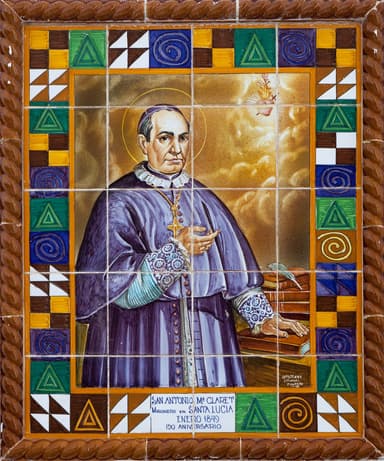
St Antony Claret is remembered as energetic almost beyond belief, but the energy was missionary rather than theatrical. He preached, wrote, governed, founded, and suffered, always with his life turned outward for souls.

October 24
This is a feast rather than an ordinary single saint’s life, and its strength is biblical clarity. St Raphael is honored as guide, healer, protector, and heavenly messenger, always under the larger truth of God’s providence.
Image still being prepared
Ss Crispin and Crispinian
October 25
Ss Crispin and Crispinian are remembered less through fully recoverable biography than through a real and ancient martyr cult surrounded by later embroidery. The distinction matters, and this life now keeps it plain.
Image still being prepared
St Cedd
October 26
St Cedd is remembered as a practical missionary bishop from the hard early English Church. He preached, founded, traveled, fasted, and kept building where the faith was still young and fragile.
Image still being prepared
St Frumentius
October 27
Frumentius was carried into his work by circumstances he never would have planned. What began in captivity became the planting of a church, and this life keeps both its adventurous tone and its solid historical core.
Image still being prepared
Ss Simon and Jude
October 28
This is a good apostolic feast because it is honest. Simon and Jude are great not because we can reconstruct every later detail, but because they were chosen apostles of Christ.

October 29
St Narcissus is remembered as grave, almost austere, and deeply peaceful. He did not need to defend himself loudly when he was slandered, and his quiet return to pastoral care makes this life memorable.
Image still being prepared
St Alphonsus Rodriguez
October 30
St Alphonsus Rodriguez is remembered as a saint of late-ripening faithfulness. Most of his holy life unfolded in one humble post at one door, and that is exactly why it remains so moving.
Image still being prepared
St Wolfgang
October 31
St Wolfgang is remembered as balanced and strong. He loved learning, prayer, reform, and solitude, but never used those loves as excuses to evade responsibility.
30 saints prepared

November 1
This is a feast rather than a single life, and its main point is simple and strong: holiness is not only for famous figures.

November 2
This is a commemoration rather than a single saint’s life, but it belongs naturally beside the saints because it shows the Church’s love for the souls still on the way to full glory.
Image still being prepared
St Malachy of Armagh
November 3
St Malachy is remembered as a saint of renewal under pressure.

November 4
St Charles Borromeo is remembered as one of the Church’s great working saints. He built systems, corrected abuses, trained clergy, and bore enormous strain without losing a life of prayer or pastoral charity.

November 5
St Martin de Porres is remembered as gentle, useful, and deeply real. His sanctity was not distant or decorative, but expressed in lowly work, practical mercy, and steady love for people others might ignore.
Image still being prepared
St Illtud
November 6
St Illtud is remembered as a saint whose exact biography is hard to recover, but whose importance is still real.
Image still being prepared
St Willibrord
November 7
Willibrord was a patient missionary builder. He crossed from England to Frisia, accepted years of instability and reversal, and kept preaching, founding, and returning until the faith had real roots there.
Image still being prepared
St Willehad
November 8
Willehad preached on a difficult frontier, accepted repeated setbacks, and then helped build the Church at Bremen with quiet steadiness.
Image still being prepared
The Dedication of the Archbasilica of the Most Holy Saviour
November 9
This is a feast rather than a single saint’s life, but it is a strong and important feast. It connects a real church building, the history of Christian worship, and a spiritual lesson about our own souls.

November 10
Andrew Avellino was a priest of deep conversion and stern reform.

November 11
Martin of Tours was far more than the saint of the divided cloak.
Image still being prepared
St Martin I
November 12
Martin I was a pope who suffered for refusing doctrinal compromise. Seized, humiliated, and exiled for defending the truth about Christ, he became a confessor-martyr whose strength was shown most clearly in abandonment and loss.

November 13
Nicholas I was a strong pope who used authority to defend truth, marriage, justice, and the weak. His firmness was not coldness, but a form of pastoral courage joined to real care for the poor and for the good order of the Church.

November 14
Laurence O'Toole was a monk and archbishop who remained prayerful, charitable, and steady in the middle of invasion and national crisis.

November 15
Albert the Great was a vast scholar, teacher, Dominican, and bishop whose mind was wholly placed at the service of God. He helped shape the intellectual life of the Church without ever becoming a merely abstract thinker.

November 16
Gertrude was deeply prayerful, intelligent, and inwardly transformed.
Image still being prepared
St Gregory the Wonderworker
November 17
Gregory the Wonderworker was a learned convert and a missionary bishop of the early Church. His preaching, prayer, miracles, and pastoral steadiness made him one of the great evangelizing bishops remembered by Christian antiquity.

November 18
This is a feast rather than a single saint’s life, but it is a rich feast.

November 19
Elizabeth of Hungary was a princess, wife, mother, widow, and servant of the poor whose charity grew more radiant under hardship. Her life joins tenderness to courage and practical mercy to deep personal sacrifice.
Image still being prepared
St Edmund the Martyr
November 20
Edmund is one of those English royal saints whose memory rests partly on firm history and partly on a beloved tradition that grew around it.

November 21
The Presentation keeps a beloved devotional tradition in view while clearly distinguishing it from the later liturgical history of the feast.

November 22
Cecilia comes through in two layers at once: as one of the Church’s most loved virgin martyrs, and as a saint whose famous story has to be held with caution.

November 23
Clement comes through less as a figure of dramatic legend and more as an early church father whose real importance lies in his letter and in the witness it gives to Roman authority and Christian life at the end of the first century.

November 24
John is hard on himself, gentle to others, and wholly given to God. He is not presented as a dreamy mystic detached from conflict.

November 25
Catherine of Alexandria is one of the Church’s most beloved martyrs, but the famous legend around her rests on very weak historical ground.
Image still being prepared
St Peter of Alexandria
November 26
Peter of Alexandria is remembered as a bishop who had to hold the Church together under persecution and schism at the same time. His sanctity lies in leadership, steadiness, and martyrdom rather than in legendary ornament.
Image still being prepared
St Virgil of Salzburg
November 27
Virgil is a learned Irish missionary-bishop whose life was practical, pastoral, and surprisingly wide-ranging. He governed, preached, built, settled disputes, and helped carry the faith into new lands.

November 28
Stephen is a severe monk whose hidden life was forced into public witness. He was not martyred by pagans, but by a Christian empire that had turned its violence against monks and the defenders of sacred images.
Image still being prepared
St Saturninus of Toulouse
November 29
Saturninus is remembered through a martyr story more detailed than the evidence will fully support, but the ancient cult behind it is strong.

November 30
Andrew first stands out as the apostle who heard Christ, followed Him, and then brought his brother. That pattern of receiving and handing on is more important than the later picturesque legends.
31 saints prepared
Image still being prepared
St Eligius
December 1
Eligius is a saint who proves that practical competence and real holiness do not have to be enemies. He could work in a court, handle wealth, and deal with public affairs without losing simplicity or compassion.
Image still being prepared
St Chromatius of Aquileia
December 2
Chromatius is a bishop whose holiness and intelligence were both serviceable. He stands out less by striking miracles or legend than by being dependable in hard times: a man other churchmen could lean on, consult, and trust.

December 3
Francis Xavier is remembered as a missionary of restless charity and astonishing endurance. He traveled widely, taught, organized, defended converts, adapted to new peoples, and died still reaching for one more field for the Gospel.
Image still being prepared
St Osmund of Salisbury
December 4
Osmund is a bishop-builder and organizer whose sanctity was quiet, disciplined, and bookish rather than dramatic. He ordered worship, trained clergy, and worked patiently within the rough machinery of church and kingdom.
Image still being prepared
St Sabas
December 5
Sabas is a desert saint in the fullest sense: hidden, practical, severe, and fatherly. He wanted silence, but men kept finding him, and so the solitary became a founder whose influence reached even emperors.

December 6
Nicholas is remembered through a small historical core and a very large body of beloved legend. What remains clear through both is the picture of a bishop associated with generosity, justice, protection, and mercy.

December 7
Ambrose is one of the commanding men of Christian history. He could govern, teach, write, argue, and stand before emperors without yielding where conscience was at stake.

December 8
The Immaculate Conception is a feast that is both devotional and exact. It does not leave the matter as a warm Marian sentiment.
Image still being prepared
St Peter Fourier
December 9
Peter Fourier is a saint of patient reform and practical holiness. He did not try to change the Church by dramatic gestures alone.
Image still being prepared
St Gregory III
December 10
Gregory III is a pope of firmness and quiet range. He had to defend the Church’s reverence for holy images, strengthen missionary work, and steer Rome through political danger at the same time.
Image still being prepared
St Daniel the Stylite
December 11
Daniel is a saint whose outward life was strange but whose inward life was plain, steady, and useful. He prayed, warned rulers, defended the faith, and taught ordinary Christians about judgment, almsgiving, and love of God.
Image still being prepared
St Finnian of Clonard
December 12
Finnian is a teacher more than a wonder-worker. The later marvels remain around him, but the center is Clonard: study, formation, disciples, and the renewal of religion and learning through one man’s school.

December 13
Lucy is remembered through an ancient martyr cult stronger than the later decorative details of her acts. Her historical outline is modest, but her place in the Church's memory is secure and very old.
Image still being prepared
St Spiridion
December 14
Spiridion is a very unbookish saint, yet a memorable one.
Image still being prepared
St Nino
December 15
Nino is remembered as a missionary saint whose early historical outline is real even though many later details are not. What remains is still compelling: a holy woman whose prayer and witness stand near the conversion of a nation.

December 16
Eusebius is remembered here as a bishop who paid dearly for refusing to sign a lie. He formed clergy in common life, suffered for the faith in exile, and then came back to the work of healing and strengthening the Church.
Image still being prepared
St Olympias
December 17
Olympias is a woman of rank who spent herself like a servant. Her life is not built on one dramatic scene, but on generosity, constancy, and endurance under ecclesiastical persecution.
Image still being prepared
St Winebald
December 18
Winebald is a saint of quiet missionary endurance. He was not a conqueror or a spectacular wonder-worker.
Image still being prepared
St Anastasius I
December 19
Anastasius I stands as a quiet but weighty early pope. His life is brief in the sources, yet the esteem of Jerome and others shows a bishop remembered for holiness, sobriety, and doctrinal firmness.

December 20
Dominic of Silos is a builder after ruin. He begins in obscurity, suffers for refusing royal pressure, and then patiently turns a broken monastery into a great one.
Image still being prepared
St Thomas the Apostle
December 21
Thomas first stands out as the apostle of the Gospel itself, not as a bundle of later legends. His love, slowness, honesty, and final confession are the fixed center.

December 22
Frances Cabrini is one of the biggest December lives because her work was huge. She crossed oceans, opened schools and hospitals, fought through confusion and opposition, and stayed fixed on the poor immigrants she had come to serve.
Image still being prepared
St Servulus
December 23
Servulus had almost nothing, and that is exactly why This life hits so hard. He could not walk, sit upright, or feed himself, yet he learned Scripture, praised God, gave alms, and died listening for heaven.
Image still being prepared
Ss Tharsilla and Emiliana
December 24
Tharsilla and Emiliana are remembered in a very quiet way. There is no public career here, only family life turned into prayer, fidelity, and readiness for death.
Image still being prepared
The Nativity of Our Lord Jesus Christ
December 25
Christmas Day is kept here in two movements: first the birth at Bethlehem, then the meaning of it. It is full of wonder, humility, and gratitude.

December 26
Stephen stands at the start of Christian martyrdom with unusual clarity.

December 27
John is not just the eagle of theology here. He is the disciple who stayed close to Jesus, cared for Mary, taught the Church, fought error, and kept coming back to love.

December 28
This is a feast, not an ordinary life. It keeps the feast both sorrowful and triumphant: the Holy Innocents are helpless children, yet also the first little martyrs gathered around Christ.

December 29
Becket is one of Butler's fullest and most human saint portraits. He begins as a brilliant court man, becomes an archbishop who knows exactly what the cost of conscience will be, and ends in blood inside his own cathedral.
Image still being prepared
St Egwin
December 30
Egwin is remembered as a stern bishop, a pilgrim under accusation, and the saint of Evesham's beginnings. The old local marvels remain, but the central memory is of a real reformer whose name stayed bound to one of England's great abbeys.
Image still being prepared
St Silvester I
December 31
Silvester matters because of where he stands in Christian history.