Lives Of The Saints
March 7
SS Perpetua and Felicity
Perpetua and Felicity are among the most historically substantial early martyrs — Perpetua's prison diary, written in her own voice in the days before her death in the Carthage arena in 203, is one of the only first-person documents from any woman of the early Christian centuries.
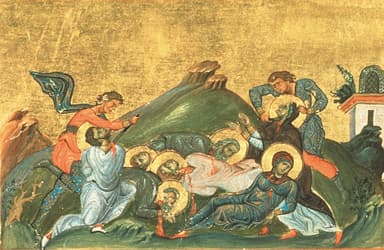
Saints Perpetua and Felicity with companions, Menologion of Basil II
Brief life
Perpetua and Felicity are among the earliest and most historically reliable of the Christian martyrs, and the document that tells their story is unlike anything else in the early Christian period. The Passion of SS Perpetua and Felicity preserves, in its opening sections, the prison diary that Perpetua herself wrote in the days before her death — making it one of the only texts in the first three centuries of Christianity written by a woman about her own experience and in her own voice. This is not hagiography composed at a distance but primary witness.
Perpetua was a young married noblewoman of Carthage, nursing an infant son, arrested with her slave Felicity and three others during the persecution under Septimius Severus around the year 203. Felicity was pregnant at the time of the arrest and gave birth in prison days before the execution; she was afraid the pregnancy might delay her death past the day on which her companions died, and was spared that separation. They died in the arena at Carthage on March 7.
The diary Perpetua wrote records the conversations with her father — a pagan who came repeatedly to the prison, sometimes gentle, sometimes violent in his grief, always trying to break her resolve — and the visions she received that confirmed for her the path she was on. The most striking vision is the ladder to heaven set with instruments of torture, at the foot of which a great dragon lay: she stepped on its head and climbed. Another vision showed her brother Dinocrates, who had died young of cancer, suffering in a dark place, and then the same brother transformed by her prayer, healed, drinking from a pool. The second vision stands as one of the earliest patristic testimonies to prayers for the dead.
The eyewitness account of the arena — the charging animals, the final act of execution, the composure of the martyrs — was added by a witness whose identity is unknown but whose account is credible in its specific detail. Augustine preached on Perpetua and Felicity and regarded their feast as among the most important in the North African church.
Keep reading
Nearby saint lives
Move through the calendar without leaving the saint library. These nearby feast-day lives help keep the reading trail connected.
Pray with this saint
Carry this saint into prayer
If this life stirred a particular need, keep going with the closest prayer links in the library.