Lives Of The Saints
November 23
St. Clement of Rome
Clement of Rome is significant primarily as the author of the letter to Corinth — the oldest Christian document outside the New Testament, written around 96, which intervenes in a church dispute and in doing so provides early evidence of Roman ecclesial self-understanding.
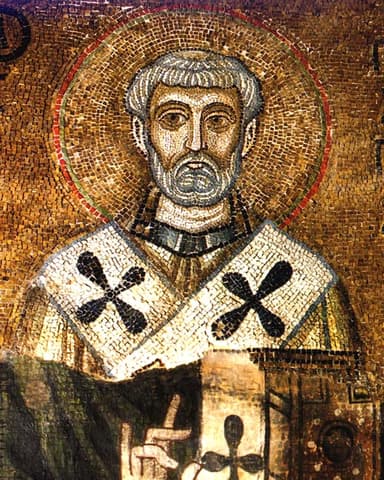
Saint Clement of Rome, devotional portrait
Brief life
Clement of Rome is the third or fourth bishop of Rome after Peter — the lists vary — and the author of a letter to the church at Corinth that is one of the oldest Christian documents outside the New Testament itself, probably written around 96 during the reign of Domitian. His significance is both historical and theological: historical, because the letter gives genuine evidence of the structure and concerns of the Roman church at the end of the first century; theological, because the letter's intervention in the affairs of another church is itself a datum about how early the Roman church understood its role in the wider community of believers.
The personal biography is frustratingly sparse. Clement knew Peter and Paul — Irenaeus says so, and it is plausible — and Philippians 4:3 mentions a Clement among Paul's fellow workers, though whether this is the same person cannot be confirmed. His family background, the circumstances of his episcopate, and the date and manner of his death are all uncertain. The tradition that he was martyred by being thrown into the sea with an anchor tied to his neck is a legend from a much later period; the earlier sources, including Irenaeus and Tertullian, do not describe him as a martyr.
What is certain is the letter. Written in the first person plural on behalf of the whole Roman church to address a schism at Corinth in which certain presbyters had been unjustly deposed by a faction, it argues at length from scripture, from the order of creation, and from the apostolic tradition for the restoration of the deposed ministers. It also asserts, without quite explaining, that the Roman church has the right and the obligation to make this intervention. The letter stands as evidence both for what it says about the late first-century church and for what it implies about Rome's self-understanding at that moment.
Keep reading
Nearby saint lives
Move through the calendar without leaving the saint library. These nearby feast-day lives help keep the reading trail connected.
Pray with this saint
Carry this saint into prayer
If this life stirred a particular need, keep going with the closest prayer links in the library.