Lives Of The Saints
March 3
St. Kunigunde
Quick answer
At a glance
- What it is
- Kunigunde was the Empress who governed the Holy Roman Empire during her husband Henry II's illnesses, founded the monastery of Kaufungen.
- Feast
- March 3
- Source
- Butler's Lives of the Saints, Volume I (January-February-March), March 3, St Cunegundes, Empress, Christian Classics 1990, pp. 459–461. Read the source standards.
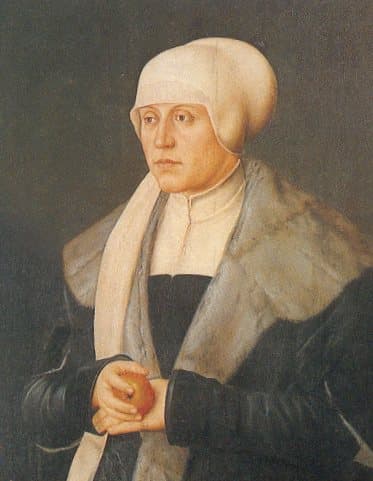
Saint Kunigunde, Bavaria, 15th–16th century
Brief life
Kunigunde — also spelled Cunigunde or Cunegundes — was the wife of the Holy Roman Emperor Henry II and was canonized, as he had been half a century before, as an acknowledgment that the holiness visible in her conduct of a royal life had been genuine rather than performed. Henry was canonized in 1146; Kunigunde in 1200, by Innocent III. Together they represent the medieval papacy's considered judgment that the married life, even a royal one, can be a path to canonized holiness.
She was born around 978, the daughter of Count Siegfried of Luxembourg, married Henry in 998, and was crowned Empress with him in 1014. The political life of their reign was turbulent — the early years of the eleventh century in the Holy Roman Empire were not peaceful — and Kunigunde played an active role in the governance of the empire during her husband's serious illnesses. She founded the Benedictine monastery at Kaufungen in Hesse in 1017, originally as a thank-offering for Henry's recovery from a serious illness.
After Henry's death in 1024, Kunigunde became a nun at the community she had founded, living there under the regular discipline until her death in 1033 or 1039. The tradition of her virginal marriage to Henry appears in the later hagiographical sources rather than in contemporary evidence, and represents a devotional elaboration that is neither affirmed nor dismissed on that basis alone. What is securely established is the Kaufungen foundation, the documented monastic life, and the wide popular veneration that grew in the German-speaking lands across the centuries between her death and Innocent III's formal recognition of it.
Next step
Browse the novena library
Browse the broader library if you want to move from reading into prayer.
Keep reading
Nearby saint lives
Move through the calendar without leaving the saint library. These nearby feast-day lives help keep the reading trail connected.
Pray with this saint
Carry this saint into prayer
If this life stirred a particular need, keep going with the closest prayer links in the library.