Lives Of The Saints
September 4
St. Rosalia
Quick answer
At a glance
- What it is
- Rosalia sought Christ in the hidden life of a cave; centuries later Palermo turned to her during plague and embraced her as its patron.
- Feast
- September 4
- Source
- Butler's Lives of the Saints, Volume III (July-August-September), September 4, St Rosalia, Virgin, Christian Classics 1990, pp. 486-487. Read the source standards.
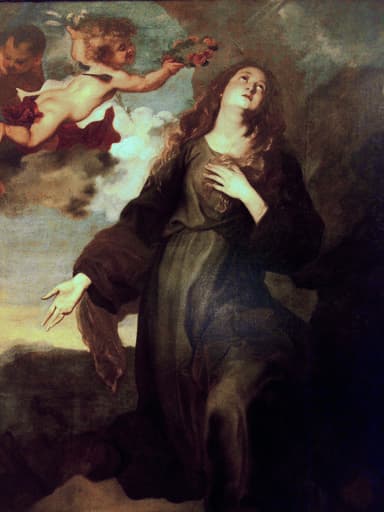
Saint Rosalia Crowned by Angels, Anthony van Dyck
Brief life
Rosalia is loved in Palermo as the hermit of Monte Pellegrino and the city's heavenly patron. Churches in Sicily bore her name by the thirteenth century, long before the written biographies now used to tell her story. Local tradition remembers a young woman leaving worldly prospects to live first in solitude near Bivona and later in a cave above Palermo, giving herself to prayer and penance.
Her devotion gained new public force when plague struck Palermo in 1624. Reported visions directed searchers to human remains in the grotto on Monte Pellegrino. After examination, the relics were brought into the city, and Palermo credited Rosalia's intercession with deliverance from the epidemic. She became the city's principal patron, a sanctuary rose at the cave, and her September 4 feast remained one of Sicily's great acts of popular devotion.
No early biography survives, so details about Rosalia's noble ancestry and the precise course of her hidden life remain local tradition rather than secure history. The older evidence is her established medieval cult; the later evidence is the documented flowering of devotion after 1624. Together they preserve the witness of a woman who sought Christ in obscurity and became, centuries later, the beloved protectress of a city.
Historical note
No early life of St. Rosalia survives. Her medieval cult and the documented growth of devotion after remains were found in 1624 are firmer than the later details of her biography.
Next step
Novena to St. Rosalia
A novena connected to this saint is in the library.
Keep reading
Nearby saint lives
Move through the calendar without leaving the saint library. These nearby feast-day lives help keep the reading trail connected.
Pray with this saint
Carry this saint into prayer
If this life stirred a particular need, keep going with the closest prayer links in the library.